Kere's Landsphere

Travelogue from points around the world.

Thursday, June 04, 2009

Spring Break in the Balkans
Photobucket

As I'm leaving this intriguing peninsula with its mountainous terrain and rather obliquely developed cultures this summer, I decided to use spring break as an opportunity to try and cover as much of it in one go as I could. Hence, I rented a car and endeavored to explore seven countries in nine days. As the roads in the Balkans are notoriously hazardous - single lane alleyways of torn asphalt weaving around gaurdrailless mountaintops with rumbling semis around every bend - the trip was as harrowing as it was adventurous. But thanks to Red Bull and my Ray-Bans, I finished the loop in more or less one piece. Let me share...

The trip began in Podgorica, Montenegro where I unhappily reside. The first leg of my journey was to Belgrade, Serbia. I decided to go by train since you can just park your car on the train, sleep overnight in a sleeping car, and wake up in the morning refreshed and ready in drive - in theory at least. Though the sleeping berth was relatively painless, and the border guards awoke me at night with only a mild degree of disdain for my non-Serbianness, the car had been parked on the train backwards. Though this could easily have been due to the simple ineptness of the Montenegrin rail staff, I somehow suspected that it was a punitive act against me. There had been in Podgorica, the evening of my journey, the biggest event in recent Montenegrin history: Italy was playing soccer against Montenegro in the Podgorica stadium. The rail staff was, then, irked by me for disturbing their great cultural moment by actually making them come to the train station and do work. Heaven forbid. Yet, though backing the car out of the train was an exercise in frustration, I made it out with nary a scratch, ready to begin my voyage.

As Belgrade really is a city for the night (some of the best clubs in the Balkans are there) I didn't see much point in sticking around. Thus, as soon as I was carbound, I kept on going, northwards to the Romanian border. Once there I had a choice: the long scenic route through the mountains, or the quick flat route through the plains. Momentarily forgetting what part of the world I was in, I chose the mountain path. This was, if not really a mistake, at least a gaff on my part. Mountain routes in the Balkans translate to treacherous winding lanes where one spends the entire journey, not appreciating the pretty scenery, but clenching the steering wheel white-knuckled as one weaves around slow, lumbering trucks into the other, oncoming lane of traffic, generally avoiding countless head-on collisions by mere inches. Fortunately, I picked up hitchhikers to make the time go by. Yes, already on the first day of my trip, I was going nuts.

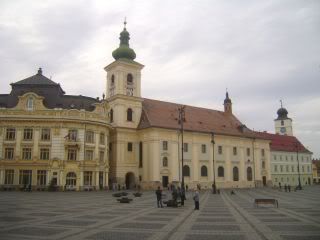
Fortunately, the route I chose did take me through some very nice parts of Romania. My first stop was in Sibiu, a very pleasant mountain town replete with old buildings and a grand public square. I stayed long enough to buy a fried fish burger and then hit the road again.
Photobucket

I drove all evening and through the night, then, until I reached Bucharest. the road took me into a really spectacular valley in the Transylvania mountains, an experience I was not able to enjoy too fully as it grew dark. I am almost inclined to return to Romania just to spend more time in these mountains - they really are breathtaking.

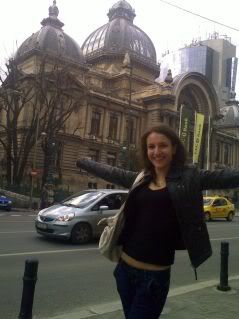
Finally I made it into Bucharest. Now, having lived in Moldova, I thought I knew Bucharest reasonably well. I knew which hotel I wanted to stay in and the general highlights of the city. I was not, however, prepared for what an insane place Bucharest is to drive in! Imagine a grid system, and then imagine the exact opposite, and that's Bucharest. After driving around for a couple hours I finally made it to my hotel, at 2 in the morning, and slept loglike.

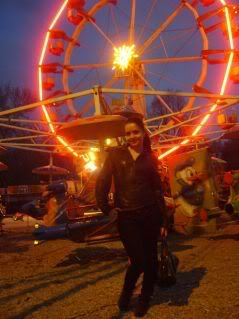
the next day I was able to enjoy Bucharest more properly. I met my friend Tanya, one of my old students from Moldova, and she and her friend showed me the sights and sounds of the city. The amusement park was a delight (though not really as life-threatening as those in Moldova, sadly) and the Chinese food was, at least, not typical Balkan fare. Good times!
Photobucket

Photobucket

In the car the next morning I was torn between heading north to Moldova or south to Bulgaria. I allowed fate to make the decision for me - as I couldn't figure out the roads anyway, I just drove along one until it dumped me out of town, a direction that wound up being south. Bulgaria it was, then.

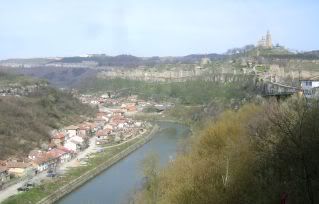
Bulgaria was really a pretty nice country, and one I am sorry to have missed for all these years in the Balkans. Not having learned my lesson well enough the first time, I again decided to take the long and mountainous route through the country. This road, happily, took me through the town of Plovdiv. With a picturesque castle set high above a valley, Plovdiv was a scenic spot to take a break.
Photobucket

By evening I had arrived in Sofia. Another nice city, Sofia, boasting wonderful architecture, very nice restaurants, and another insane road system. Worth a trip!
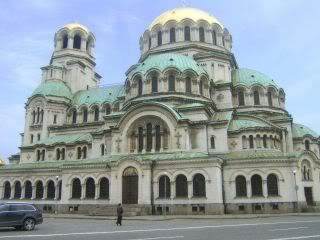
Photobucket

After a nice night in Sofia enjoying the local folk music at what was perhaps the strangest club I've ever been in (Rows of tables set up banquetlike with musicians on stage that occasionally came down to stand in what seemed like an empty fountain so that the waitstaff could through fistfulls of napkins on them while the crowds jiggled their hips on the tables to the music) I was all set to begin my voyage. next stop: Macedonia.

Now, I had fully intended to stop in Macedonia. However, two factors prevented my doing so. One was the elderly hitchhiker whom I picked up just across the border who, it turned out, wanted a ride to the exact opposite end of the country. The other factor was the road. Though Macedonia is one of the most mountainous countries in the Balkans, this road I got on was amazing - so wide and comfortable and smooth. I just couldn't get off it, mesmerized as I was by blinding speeds upwards of 80 km/hr. I just wove along this strip of exotically unpocked asphalt, allowing my hitchhiking guest to prattle on in his language (Bulgarian, I think) like a radio without dials. eventually, I deposited him in his little village, wherein he tried to offer me an electric shaver for my troubles (I politely declined) and that was Macedonia. Next: Greece.

Northern Greece was really the main objective of this little voyage. The hundreds or thousands of kilometers before this was just prelude. So, I slowed the rate of my lightning tour and really let myself enjoy the remainder of my trek.

My first night was in Thessaloniki. This is a thoroughly modernized town that has yet managed to keep its ancient history preserved and incorporated into the terrain of its daily life. The town's most famous monument is the White Tower, but I was most impressed by a strip of ancient Greek ruins that cuts through the city's center, around which many young punks and alternakids hang out and eat crepes. Tres cool, especially for the Balkans.
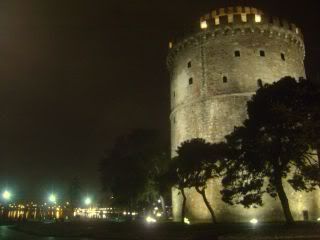
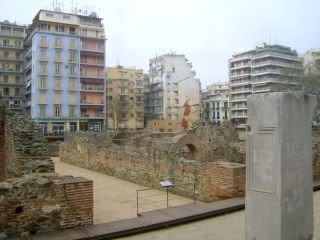
Photobucket

Photobucket

After a nice time in Thessaloniki, then, I headed along the coast to Mount Olympus. Mount Olympus was something of a pilgrimage for me, mired in my classics studies as I fancy myself to be, and thus I was ready to be inspired by the sense of holy mystery that had conjured to the minds of Ancient Greeks so long ago the notions of Zeus, Hera, Athena and the like. Of course, I had learned on my last trip to Greece last summer to be circumspect of such ambitions. The era of the ancients has long been subsumed by other epochs in Greece's history. Yet, coming to Olympus, I was rewarded with such a sublime and spectacular mountainscape that I could truly understand how it had given rise to such timeless myths. The mountain is a series of jutting and falling peaks, collected about hidden chasms and ravines, the entirety of which was obscured in blanketing puffs of cloud. Olympus was a mountain that truly seemed to reach the heavens.

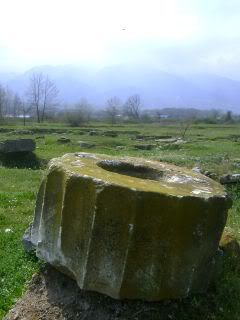
At Olympus' base I stopped at a singular collection of ruins at a site called Dion. Though these ruins were slighter in scale than those in Athens or Delphi, what made them really stand out was how they were incorporated together with the natural beauty of the area. Small streams trickled between the columns, and flowers bloomed at the feet of the statues there assembled. Dion was magical.
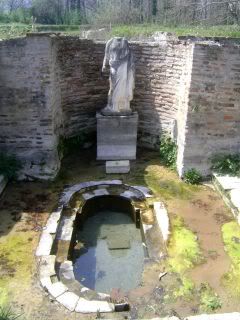
Photobucket
If you look closely, you can even see minnows in the pool
Photobucket

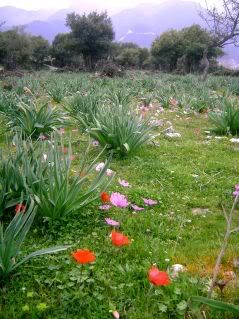
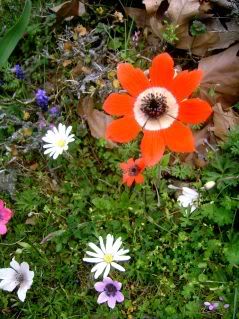
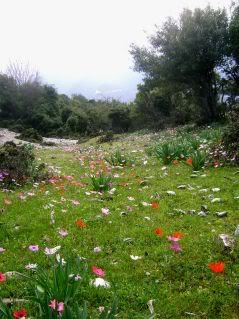
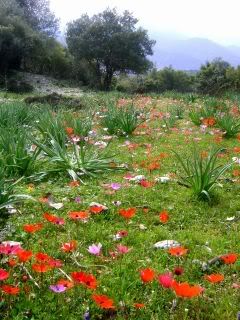
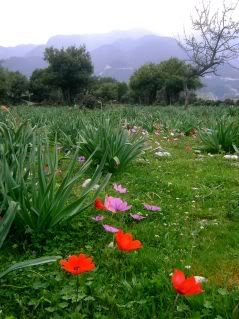
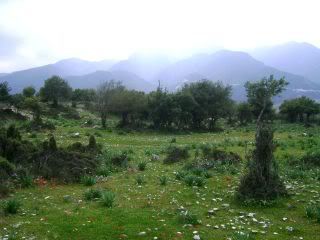
I then drove towards Olympus. Along the way I was struck by an amazing sight: just as I reached the mountain, fields dotted by thousands of the most colorful and exotic flowers I have ever beheld. I spent a good hour just running amongst the flowers, letting them pose for my camera.
Photobucket
Photobucket
Photobucket
Photobucket
Photobucket
Photobucket
Photobucket

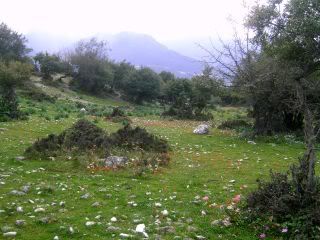
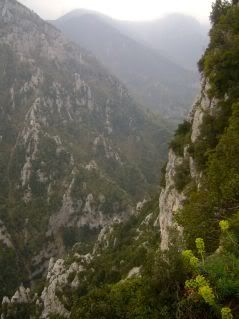
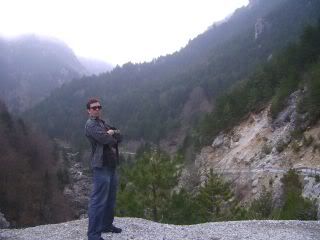
Happily intoxicated by floral beauty as I was, I continued to roam about Olympus, enjoying the playground of the gods.
Photobucket
Photobucket

Sadly, it came time for me to leave this fantastical mount. I waved goodbye to the Olympians on their nest and drove on.

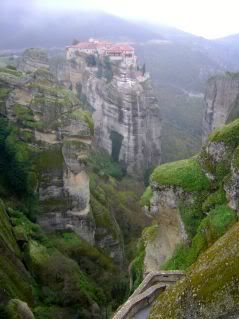
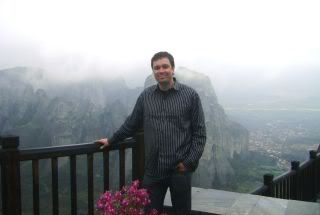
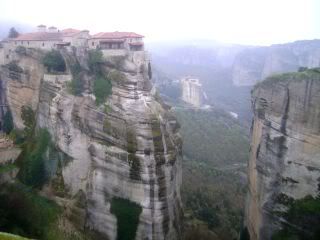
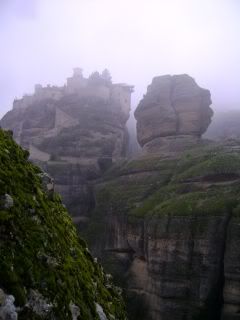
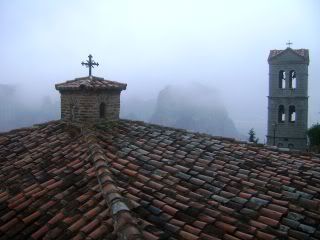
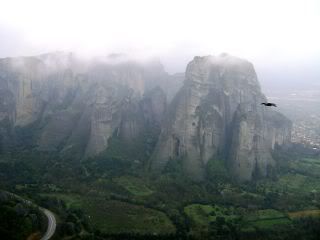
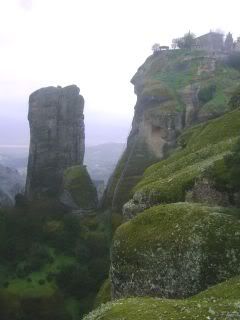
That evening I reached Meteora, and after a night's rest at a very homely hotel I was able to explore. Meteora is another incredibly scenic sight in Northern Greece. Enormous rocks serve as roosts for a number of small monasteries built upon their craggy bluffs. One can feel the appeal of climbing these boulders in order to transcend the earth and all its worries, to just hide amongst the clouds and consider God.
Photobucket
Photobucket
Photobucket
Photobucket
Photobucket
Photobucket
Photobucket
Photobucket

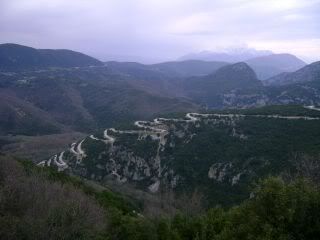
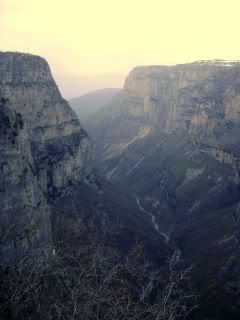
After scaling the heights of the monumental boulders for a morning, I was ready to continue my trip. After coursing through the mountains (some of which were high enough to be wrapped in clouds and blanketed in snow - dangerous if beautiful combo for driving) I arrived in Zagori National Park. This was a pleasant enough escape that boasts quaint little villages scattered amongst a number of pretty, if ultimately unimpressive mountains. The one natural feature of Zagori that is really exhilarating, though, is the Vikos Gorge, a frighteningly deep canyon that falls quickly away to a distant trickle of a river far below.
Photobucket
Photobucket

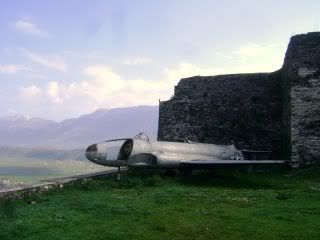
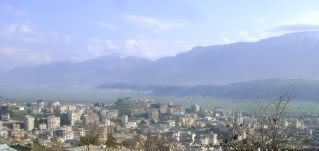
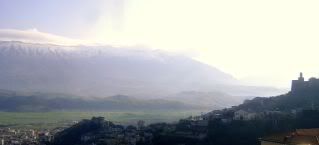
After driving about Zagori I then headed down from the mountains and headed for Albania. I made it through the border that night, picked up another hitchhiker (I must have accrued some seriously good karma from this trip, eh God?) and made it to Gjirokaster that night. Gjirokaster, in addition to an impossible name, also boasts a fascinating fort atop its hilly peak. In the morning I could see the misted valley stretching far and away below as I visited the fort and took in its sights, most especially an old NATO plane that had crashed there and was thought, in the heyday of Albanian panic, to be the precursor to an invasion. Ah, Albania! At least your paranoia has left us with all those cute little bunkers dotted across your hillsides.
Photobucket
Photobucket
Photobucket


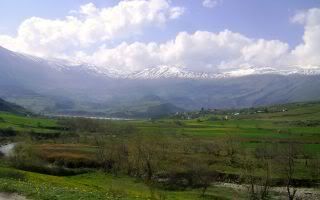
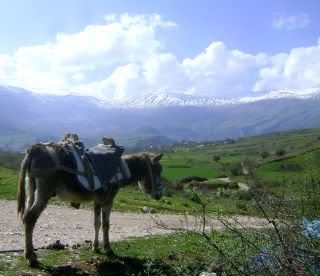
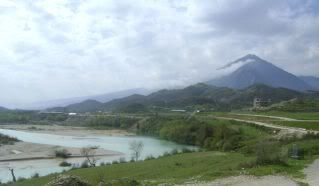
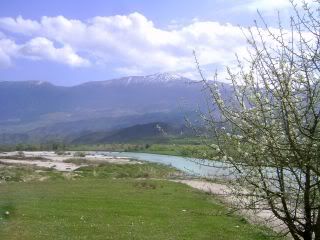
The subsequent drive up to Tirana was one of the most beautiful I experienced on the entire journey. So beautiful in fact that I came down with a massive case of dizziness and nearly drove off a cliff. Woo-hoo!
Photobucket
Photobucket
Photobucket
Photobucket

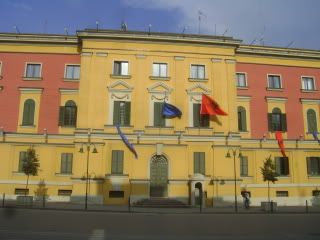
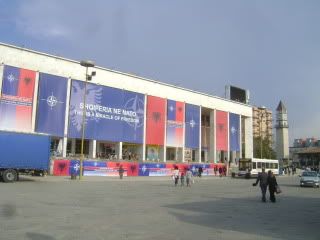
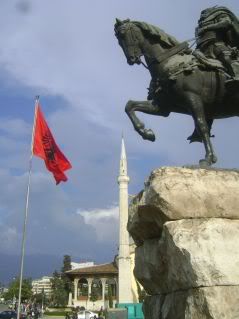
That evening I made it to Tirana, where I got to see my good friends Travis and Amy. We wandered about the city some the next day. That weekend, Tirana was setting up for a big to-do to celebrate the fact that Albania was poised to join NATO. Quite a big leap from the days of freaking out over NATO planes with engine trouble. The banners declared that it was a "miracle of democracy." Well, that might be stretching it. Still, pretty cool.
Photobucket
Photobucket
Photobucket

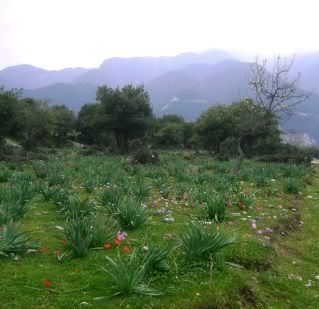
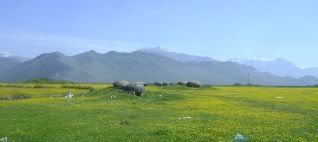
Finally, after spending time in Tirana, I was poised for the return trip to Montenegro. Another beautiful drive through the floral-coated mountains, this time replete with all those cute little bunkers. The trip was, though exhausting, a great way to explore this corner of Eastern Europe, my accidental home - frustrating and spectacular as it has been - for the past four years.
Photobucket

Thursday, May 07, 2009

Moldova: Aftermath and Easter

Photobucket
The burnt parliament building


The recent riots in Moldova have been largely forgotten by the media, if they were ever reported in the first place. While a voting scandal of this magnitude and the subsequent burning of a national parliament building in any Western European country would have been headline news around the world, Eastern European countries - and little Moldova in particular - are largely ignored.

This is very unfortunate, as stability in Eastern Europe is essential towards realizing stability for all of Europe and normalizing relations between Europe and Russia. Sadly, from what I saw when I visited Moldova at Easter, the degree of corruption perpetrated by Moldova's governing communist party has entrenched the country in a legacy of poverty, depression, and hopelessness that will affect Moldova for years to come.

The mood in Chisinau, only two weeks after the demonstrations, was one of dour depression. Everyone seems to have given up hope. As my friend Corina put it, "We're tired of fighting anymore." many of the discos were closed or empty, and talk of leaving the country was on everyone's lips.

Why this feeling of hopelessness?

Allow me to recount the events of the demonstrations, including the details provided by the people I talked with. Several weeks ago, Moldova had parliamentary elections. In previous elections, the communist party had often won most of the votes. One reason cited for this has to do with the elderly. Older voters remember how, during the days of the USSR, they were guaranteed a monthly income. These days, now that capitalism reigns, the elderly are given small stipends (often about $60 a month) by the communist party. While this is not enough to live on, it is still a system of making an income that the elderly are familiar with. thus, they vote for the communists out of a sense of security and nostalgia.

Unfortunately, despite giving the elderly pocket money, the communist party has done nothing else good for Moldova. The president of Moldova, Vernon - a former KGB member - is a renowned crime boss whose son has stolen a number of successful Moldovan companies by planting false criminal evidence in their homes and making them flee the country. Additionally, the Molovan government under communist rule has a record of stealing funds given to the country by various NGO's, the members pocketing this money for their own ends. Essentially, the communists a re nothing more than a gang of criminals who use Moldova to further their own greed.

The Moldovan people have long known this. Indeed, government in Moldova has never been very efficient, not since its liberation from the USSR. However, at this last election, people hoped for a change. the recently elected mayor of the capital, Chisinau, is not communist, and many people thought that the rest of the country would also turn away from the communists as well. People hoped that the elections would at least give them a voice calling out for change.

Unfortunately, the communist government stifled this voice.

The accounts of voting fraud committed by the communist party are legion. Thousands of dead voters apparently rose from their graves to vote communist. People living abroad in Italy and Romania (many of whom left to work abroad because the communist party has made life in Moldova so difficult) apparently all voted communist on their absentee ballots. Communists even came into hospitals for the mentally ill and made them stamp "communist" on the voting forms. The acts of fraud are so flagrant, clearly the communists did not try to hide the fact that they had stolen the election. They just didn't care that anyone knew. They just wanted power, by any means necessary. As a result, the communists won over 60% of the vote, enough to allow them to rewrite the constitution.

Although Moldovans traditionally value peace and often do not stage demonstrations when confronted by political corruption (a tenancy the communists were probably banking on) this year the Moldovans decided to protest. Thanks to Flickr and Facebook, a call went out amongst the young and angry to rise up and protest. Thousands of Moldovan youth heeded the call and demonstrated against the communists before the parliament building.

Unfortunately, the communists were ready for them. As media interviews and various blog entries have proved (like this: http://savemoldova.blogspot.com/2009/04/comunist-conspiracy.html) the police hired people to act as instigators of violence. The instigators embedded themselves into the ranks of protesters and became violent, throwing rocks at the parliament building (placed there, some have said, by the police as well) and then looting and burning the building as well. many of the younger, more excitable members of the crowd joined the instigators and began attacking the parliament building as well. After all, when one sees others acting with justified outrage and violence, it is hard not to get caught up in the passions of the moment.

Photobucket
Another view of the Moldovan Parliament

Unfortunately, the police had laid their trap well. As soon as the violence started, the police swooped, arresting people indiscriminately - those who were engaged in the looting and those who were just standing in the crowd as well. Even in following days, using photographic evidence, the police came barging into university classrooms to arrest those who had been at the demonstrations. People were tried and sentenced without lawyers present, and several were killed during the interrogation process. Even while I was there, some parents still had no idea where there children were or if they were still alive. There were, of course, subsequent plans for demonstrations. One was attended by older Moldovans to show their solidarity with the young and disprove the communist's notion that the riots were merely acts of teenage rebellion and not to be taken seriously. But, as people were still afraid of the instigators, many did not show up to the demonstrations and the protests ended. The streets swarm with police, and - though everyone says "Down with the communists!" in private, few dare to make these feelings public. No one else wants to be arrested, tortured, or killed.

Not surprisingly, none of the instigators (who can be seen on the front lines in photographs taken of the event) were ever arrested, despite how many non-violent protesters were.

Of course, despite the facts, the communists have made up their own story. They claim that it was Romanian spies who hired the instigators. As a result, Moldova dismissed the Romanian ambassador and closed off diplomatic ties with Romania. As the communists have largely been bedfellows of Putin's Russia, despite the fact tat the majority of Moldovans are ethnically Romanian, this was clearly a maneuver to ally Moldova more strongly with Russia. However, Romania retaliated as well. Romania announced that it would grant a Romanian passport to anyone whose grandparents or great-grandparents had been Romanian (which would include anyone whose family had been in Moldova while it was part of Romania in the period of Moldova's independence from Russia in the early part of the 20th century)and that the passport could be processed in mere weeks.

Not surprisingly, many people I talked to while in Moldova either planned or entertained the idea of getting a Romanian passport and leaving the country. It's not that they do not like their country, but after a lifetime spent putting up with a corrupt government and the consequent poverty and lawlessness in the country, most people have just had enough. They are ready for a better life, and are convinced that they will not have it as long as they stay in Moldova. Sadly, they are probably right.

Photobucket
An orthodox church on Easter

Photobucket
People standing before the church on the night of Easter

Photobucket
Enjoying a delicious Easter meal

So, my time in Moldova was bittersweet. I saw great friends and had fun nights dancing at the discos and drinking good Moldovan wine and cognac. The weather, too, was fantastic. Springtime, and Easter especially, is traditionally a particularly pleasant time in Moldova. The trees and hills in the countryside are adorned with flowers and blossoming trees, and everyone is excited by the promise of warmer weather ahead. Easter, too, is a special occasion, where people go to church all night, stand and listen to a sermon, and in the morning the priest comes around and blesses the baskets of food the people have brought with them with sprinkled holy water. Afterwards, the people take the blessed food home and have a huge family feast. It should be a happy, familial, and joyous occasion.

Sadly, this Easter, joy was in short supply in Moldova.

Photobucket
On the right, selling Easter Bread for the holiday. On the left, evidence of the new swarms of police everywhere in the city.

Wednesday, April 15, 2009

A More Cultured London

This is a follow up to my previous, similarly belated post on my New Year's trip to London. My lethargy is dissipating with the rise of Spring, apparently.

Now, usually when I go to London I manage to visit the Tate Modern and the National Gallery, and this is about the extent of my cultural intake. Otherwise, I'm drinking it up in pubs and bars; shopping at Camden Market; making a pig of myself in Chinatown, on Indian food, and on fish and chips; and otherwise being a total hedonist. And, on this trip I did all these things as well. But, I did manage to make my trip slightly more cultured this go around.

Museums:
The Tate Modern hosted one of the better installations in the turbine hall that I've seen, namely a rather creepy, sci-fi installation by Dominique Gonzalez-Foerster called "The Unilever Series." This installation consisted of, amongst other things, grossly oversized objects, some representational and some not, that seemed to play at the edges of one's child's subconscious and hearken one's most primordial fears. A large copy of a cat's skeleton, a strange amorphous assemblage of iron-wrought blobs, and a massive, spiderlike sculpture that soared to the heights of the space bespoke of wonder-slash-terror with just the right edge of mystery and playfulness. Fun exhibit! They also had a fantastic Rothko exhibit, including the series of works usually on the permanent display that are best seen in dim light.
Photobucket
"The Unilever Series"


At the Saatchi Gallery there was a very interesting exhibit of new Chinese Art. Perhaps it's the oppressive nature of contemporary Chinese culture that inspires so many young Chinese artists to break out and express themselves through art. Some of the works were truly original and inspired, leading me to believe that China may be on the forefront of the new wave of contemporary art. (Though I wonder how much of that art can actually be seen in China itself!)
Photobucket
Photobucket

Theater:
I've never actually seen a play in London before. I had really been missing out! I saw two productions this time, each of which was breathtaking and had a stellar cast.

The Royal Shakespeare Company offered a magnificent production of "Hamlet," starring David Tennant and Patrick Stewart! Now, not only are these two men incredibly gifted actors, but as a sci-fi fan myself I was utterly thrilled to be able to see both these actors perform live. Now, for the longest time, David Tennant had been out with a back problem. But one day I was walking by the theater and found out he was back, playing the lead role of Hamlet! Without hesitation, I chose to wait for hours at the stage door in the hopes of gaining a return ticket (the play was, unsurprisingly, sold out). Gladly, I was not disappointed! I had a wonderful seat for what was a wonderful play. No, a superb play! No, a... Let me just put it this way: After seeing this production of Hamlet, I felt like I never wanted to see another dramtic thing ever again, the acting was all so perfect.
Photobucket
David Tennant after "Hamlet"

However, I did see another play, namely Drury Lane's production of "Oliver!" The selling point for this production was that it starred, in the role of Fagin, Rowan Atkinson! Mr. Atkinson easily stole the show, his Mr.Bean-esque brand of humor muted but still inspired enough to capture every scene he was in. I saw this production with my mom, which was quite special since she has always loved "Oliver." We even reserved a table at intermission to have dessert! The production itself was top notch. I will surely see more plays next time I am in London!
Photobucket
Mom enjoying dessert at "Oliver!"

Pub Crawl:
Now, a pub crawl may not seem like a very cultural outing, but it all depends on where you go - and who you are with! One of my hosts, Richard Chinn, is something of a self-made expert on London's history and was kind enough to take me on a tour one day of some of the most historic pubs in London. Most of these were found on the East End, an area once renowned for its criminal element though now becoming completely yuppified. It was fascinating to go to these places and imagine what this part of London once was like: boats from distant lands crammed together against the shores of the Thames, criminals and cutthroats swaggering about the crowded, dirty streets, and justice - in the form of hanging judges who strolled leisurely down the river, tried and hanged their suspects, and then moved on - was really very interesting. Plus, beer! Here are some of the places we stopped on our crawl:

Photobucket
The Prospect of Whitby, dating from 1543
Photobucket
Inside The Prospect of Whitby

Photobucket
The East End/Docklands today - once it was a lot different!

Photobucket
The Town of Ramsgate, another of Hanging Judge Jeffrys' favorite establishments, located right where the gallows used to be in fact!

Photobucket
Photobucket
The George, where legend tells (or at least my guide) that travelers a la the "Canterbury Tales" would begin their pilgrimages. Even Charles Dickens used to drink here!

Photobucket
My host enjoying a hot cider at The George

And now for something a little different:

Photobucket
That's the new and "improved" Intrepid Fox, once a punk rock landmark in Soho, now relocated and - well - just not the same. Ah, the more things change...


One thing that makes London great is the incredible variety of things to do there. One can go for the clubs or the galleries, the shopping or the history, and never run out of new experiences. It's a destination worth going, not just for a visit, but for a lifetime.

I was sad to leave London, but can't wait for my next trip!
Photobucket
Flying back to Montenegro

Monday, April 13, 2009

Chisinau's Burning! My Perspective on the Moldova Riots

Photobucket

As many of you know, I spent over two years in Moldova. While the country certainly had its problems, I found my time there to be quite rewarding. I made many wonderful friends and was rewarded with a unique insight into what is a fascinating culture in many ways. The recent outbreaks of riots following the elections, in which the communist party won over 60% of the votes - by most accounts, fraudulently - was, for me, at once surprising and wholly expected.

Since gaining independence, Moldova has remained controlled by the rich and elite. To say the country is corrupt is an understatement. Corruption defines nearly every aspect of life. Schoolteachers regularly expect bribes as a determination of children's grades, and the police seem to exist solely as an institution for bullying and money-taking.

By and large, the rich and powerful - since the fall of the USSR - have been members of the Russian speaking minority. They maintained their status since the fall of the Soviet Union and have strived to maintain that status ever since. Worse, the Russian minority holds to the view that they still belong to some avante guarde of Russian imperialism. They seem to believe that, so long as they stay true to the "motherland" and keep Moldova as Russian as possible (which, to them, means being communist) that some day Russia will reward their efforts by embracing Moldova once again and bringing the country back into the Russian fold. To this end, most of the media - controlled of course by Russian nationalists - is in Russian or, worse, from Russia itself. Hence, a Stalin/Putin communist mandate is driven into the minds of the population, even in the most remote of villages. For the Moldovans, then, to elect the communist party is expected. The communists control the media, which means the communists control what many Moldovans think and believe. It was, then, no surprise that the Moldovans elected the communists into power yet again. What was surprising was the backlash against these results.

The protests and demonstrations in Chisinau were the first of their kind in this fledgling country. Thousands of youths stormed the streets, some of whom even became violent and ransacked the parliament building. The question is not: Why did they do it? The reasons are self evident. The communist party manipulated the votes, registering thousands of dead people's names to bolster the numbers of votes they received. When elections are so clearly manipulated, it is quite common for the population to rise up against the State and demand justice. No, the question here is: Why now? The thing is, this is certainly not the first time that the communists have rigged the votes. As noted above, corruption is rife within Moldova, and this is certainly true within the election process. No one would be surprised to learn that the elections were handled unfairly. Indeed, it would surprise people more to learn that the elections had been fair. So, the Moldovans certainly did not protest because of the novelty of a corrupt election. What, then, was the cause? Why did they protest this time and not in previous elections, protest so strongly in fact that the demonstration became a riot?

First of all, it should be understood that, in the past too, people were angry at the communists and were often disappointed by the election results. Here, by "people" I mean those who are educated and intelligent enough to see beyond the Russian propaganda of the media and who have a more worldly outlook. These people, although they live in a small and rural country, are by no means a minority. for the most part, these people are citizens of Chisinau where approximately one quarter of the country's population lives. By "people", too, I do not mean only Romanian-speaking people. While Romanian-speakers are generally more antagonistic towards the communist party than their Russian-speaking counterparts, there are plenty of Russian-speakers who denounce corruption and want to live in a fair and free Moldova. So, by "people" I mean simply those Moldovans who are aware of what is going on in their country and are tired of the corruption in their government. These people have long been fed up with the depression, corruption, and poverty that prevails in their country and want a change, a change that they know the communist party will not give them. Indeed, as communist president Voronin often stands in the way of progress, pocketing state funds and allowing Moldova to remain depressed to better serve the interests of his Russian masters, the communist party seems to stand in the way of progress. So, for many years, people have been unhappy with the communist party and have been disappointed every time they won the elections. So, again, what changed this time? Why this time did people take to the streets in protest?

For one thing, Moldovans had recently begun to believe that change was in the air. In the last mayoral election in Chisinau, non-communist Dorin Chirtoaca was elected to the seat in what was a surprising - and welcome - break from the normal course of corruption that prevails in the country's politics. This was seen as a sign of hope for many Moldovans. They believed that, finally, the people's voices were being heard and that the country was moving away from the communist ideals of the past. For the communists to have won such a surprising majority of the election this time around, then, was a shock. Many assumed, even if the communists did win, they would win by a much smaller percentage than in the past. After all, one quarter of the country had elected a non-communist mayor. For the communists to win over 60% of the votes, then, was seen not only as an obvious sign of corruption, but as a slap in the face of the progress many Moldovans were anticipating. Their hopes, which they had been waiting for and counting on for so long, were dashed by the communists. It is no surprise, then, that after these elections the Moldovans were even more angry than before and were perhaps more willing to take to the streets. They had, after all, proved that their votes could matter with the mayoral elections, and they were not about to have that recent change in fortune taken away from them now.

Another reason for why the protests happened this time had to do simply with the possibility for organizing such a protest. As noted above, for a long time the media has been controlled by the communists in Moldova. Certainly, the media would do nothing to help organize such demonstrations. However, these days - as with much of the world - Moldova is better connected. Online sites such as Facebook and Twitter were responsible for rallying many of the protesters together, and cellphones were used when internet service was cut off. The recent expansion in internet and cellphone access by Moldovans allowed them something they never had before: a free media by which to share information and call for action together. Of course, it is no surprise that the communist government continues to block Facebook and other sites. The government knows it is in the wrong, and wants to oppress its people and the truth as much as possible in order to maintain its corrupt, illegitimate power. To this end, the communists and their Russian masters present ridiculous excuses for what caused the recent protests. For example:

* Romania incited the riots in order to take over the country [“We know that certain forces from Romania masterminded these riots,” President Voronin said, according to the Interfax news agency. “Romanian flags which were planted on state buildings in Chisinau prove this.”] As a refutation to this claim, see http://savemoldova.blogspot.com/2009/04/comunist-conspiracy.html

* That some insidious masterminds had manipulated the Moldovan children against their own country [“The organizers of the worst crime in the history of the Republic of Moldova are again preparing to use our children to stage riots in the government’s office on Friday and Sunday,” Prime Minister Zinaida Greceanii said.]

* That President Obama of the USA organized these protests [according to Russian political scientist Aleksander Dugin]

These excuses, of course, are all nonsensical accounts meant to detract from the real issue at hand: the Moldovan people are tired of being treated as second class humans, not only by the rest of the world, but by their own government, and they are not going to stand for it any more.

And this is the real reason why the protests happened now: because the sentiments of the Moldovan people had finally reached their boiling point, and the Moldovan people are not going to take any more. And this is why, ultimately, no matter what the communists do they cannot hold onto their power much longer. They can't blame the young and turn the country's sentiments against them. (In fact, after the protests, high school and university teachers were all forced to sign a document saying they would prevent students' protests. In response, a crowd of 3,000 older Moldovans showed up to protest in Chisinau on Sunday. This is clearly not a generational issue.) They can't close the borders to Europe and cut off the internet, because these actions will do nothing to curb the sentiments of the people living in Moldova. And they cannot blame the outside world - Romania or Ukraine or the USA - because the only reason the Moldovan people are sick of the communist party is because of the corruption within the communist party itself. The Moldovan people, long regarded as peaceful "cows" who would take whatever suffering they were given, have finally risen up. And there is nothing that the communist party can do now about it, and no matter what propaganda they spin or what oppressive measures they take, the communists' days are numbered.

These protests happened, as protests everywhere always happen, because the Moldovan people have spoken: They will not take the lies, corruption, or incompetence of their government any longer. They will rise above.

Wednesday, April 08, 2009

Photobucket
England's Lake District

Photobucket
Meeting my mom by the Tower Bridge

I have once again fallen behind in my posts. Fortunately - or perhaps not - it was a rather lackluster winter and I don't have to much to report. I did, however, manage to make it to England to see my mom and brother. Now, usually when I visit England I just stay in London. This is a fine thing, by my reckoning. Why not spend as much time as posible in one of the most exciting, cultured, and historic cities in the world? However, this time I managed to venture beyond London's city limits and took a road trip with my mom and bro up to the very lovely Lake District.

Photobucket
Mom and Matt planning the trip in a pub the night before leaving

Thanks to the time of the year, the sun hung low in the sky from dawn til dusk. As a result, the lighting was phenomenal - great for taking pictures. Additionally, a permanent frost clung to the grass and the trees, giving everything a silvery gleam. Early morning was the most beautiful time, as the lakes remained placid like mirrors reflecting the rolling hills. But throughout the day, the countryside remained lovely and picturesque.

Photobucket
Photobucket
Photobucket

After driving through the lake district for a time, we came upon the famed Hadrian's Wall. this was a massive wall built across England by the Romans to keep out the Scottish horde. Nowadays, the wall is less dramatic than it surely once was. Nevertheless, it remains a significant landmark on England's terrain.

Photobucket
Photobucket
Photobucket
Photobucket
Photobucket
Views of Hadrian's Wall

We also came across a nice stone circle. The legacy of the druids prevails!

Photobucket
Photobucket
Photobucket
Stone Circle

After trekking through nature we drove through Newcastle in the evening. I was impressed by the brown brick architecture and the soaring bridges in the city. Really, a very interesting place.

Photobucket
Newcastle at night

We spent that night in Durham. I went out in the evening to a few of the clubs in town, this being a university town and so buzzing with several bars and clubs. A couple of the places were actually pretty nice, though I was surprised to see that the girls there ventured out on the cold, blustery evening in nothing but the shortest of dresses. Sadly, I was not able to keep any of them warm myself ;) The next morning we wandered about the town, saw one of the last Woolworths in England shut its doors forever, and and were able to see the towering Durham cathedral.

Photobucket
Durham cathedral

Photobucket
Closing Woolworths

Driving back we passed through York and managed to see the cathedral there. the highlight, however, must have surely been the Sunday Roast we enjoyed on the way out of town. Nothing better than a Yorkshire pudding in York!

Photobucket
York cathedral

Photobucket
Sunday roast!

All in all, it was wonderful to experience more of the UK with my family. If you get a chance, experience the placid calm serenity of the Lake District for yourself!

Photobucket

Wednesday, December 17, 2008

Bosnia and Herzegovina

Photobucket

My last trip this summer was to Montenegro's neighbor(s?) to the West: Bosnia and Herzegovina. I went with my dear Ana, she who was good enough to take care of my deceased Phantom while I was gone in Greece. Anyone who is willing to find a pet cemetery that will bury your cat while you are out of the country truly must have a heart of gold! This is the litmus test for goodness. Anyway, it was the least I could do to take her on an adventure to Sarajevo by way of Mostar, and this we did one adventurous weekend.

Photobucket

The drive to and from Bosnia and Herzegovina from Montenegro is really fantastic. The whole way there and back, one winds through mountains and canyons, beside rivers and lakes. The mountains themselves range from arid and rocky to forested and nearly tropical, and each kilometer of the road greets you with new and fabulous spectacles of natural beauty.

Photobucket

Our first stop in Bosnia and Herzegovina was in the town of Mostar, named for the high, elegant bridge ("Most" in the local language) that spans the river and connects the city's halves. Even when the river was low (as it was then) intrepid divers plunge from the bridge into the water below, making for an interesting sight. But it is the architecture and winding alleys of the little town that makes this place truly special.

Photobucket
Photobucket

After a brief stop we continued on to Sarajevo. Sarajevo is a beautiful town nestled into a small, tree-lined valley. The modern visitor, however, is immediately reminded of the wars that transpired here. It is creepy to see a place, wonder why it looks familiar, and then recall that one had seen that same city burning with plumes of smoke on CNN. Though the city has been largely repaired since then, the over-spilling plots of gravestones that mark the city and the valley's walls are enough to remind one of the tragedy that had transpired here.

Photobucket
Photobucket
Photobucket

Despite the echoes of the past, however, Sarajevo is a beautiful, lively, and intriguing town. It certainly feels more oriental than Montenegro, as the towering minarets and bazaars of the old town make one feel the lingering presence of Ottoman influence in the region. Whether ambling through shops selling hookas or thick embroidered carpets, or otherwise enjoying the Muslim culture through visiting a mosque or drinking at a small tea shop, one feels as though transported from Europe to the Middle East.

Photobucket
Photobucket
Photobucket

Our stay, indeed, was too short, but the weekend quickly drew to a close. Our return trip was just as scenic as the voyage there, and passing through Montenegro were able to appreciate the canyons and mountains of this country more. Altogether, my venture to Bosnia and Herzegovina was an ideal way to round out the adventures of the summer.

Photobucket
Photobucket
Photobucket

Tuesday, December 16, 2008

Delphi

Photobucket

My final destination on my tour of Greece was a place I had been most looking forward to seeing: Delphi. I had always found the legends surrounding Delphi to be fascinating.

Photobucket
Photobucket

In pre-Olympian times, the site was a place of worship for the Earth Goddess Gaia. Legend tells how the site was protected by Gaia's child, a mighty python named Pythia, that was killed by Apollo when he commandeered the site for his own worship. Following this, oracles at Delphi were said to be able to channel the voice of Apollo after becoming intoxicated by fumes from a fissure in the earth, fumes released perhaps by the decaying body of Pythia himself.

Photobucket

Greek rulers would often come to Delphi to ask the oracles questions of the future. Even Alexander the Great went there before conquering the whole of his empire. Leaders would build temples, tripods, or storehouses for offerings at Delphi and soon the site became riddled with temples, a theater, and even a stadium.

Photobucket

The visitor of today has a wealth of archaeology to explore, with most of the temples reconstructed and ready for the meandering tourists who venture this way. The museum is similarly well-developed and full of elaborately detailed friezes and statues. Above all, however, the site itself - a cedar-dotted terrain of mountains and cliffs falling sharply away to the rivers and sea below - is truly breathtaking. Even if there were no mystic oracle here, one can see why the Ancient Greeks would have chosen this spot as a place to build a temple to worship the Earth Mother.

Photobucket
Photobucket
Photobucket

For me, this was an ideal place to make my last destination in Greece. I was able at least to lose myself in Hellenic antiquity and imagine what the Greece of Homer and Plato must have truly been like: a Greece of severe beauty, timeless legends, and the impending judgment of the gods.

Photobucket